GUEST
COLUMN
Central
STATES
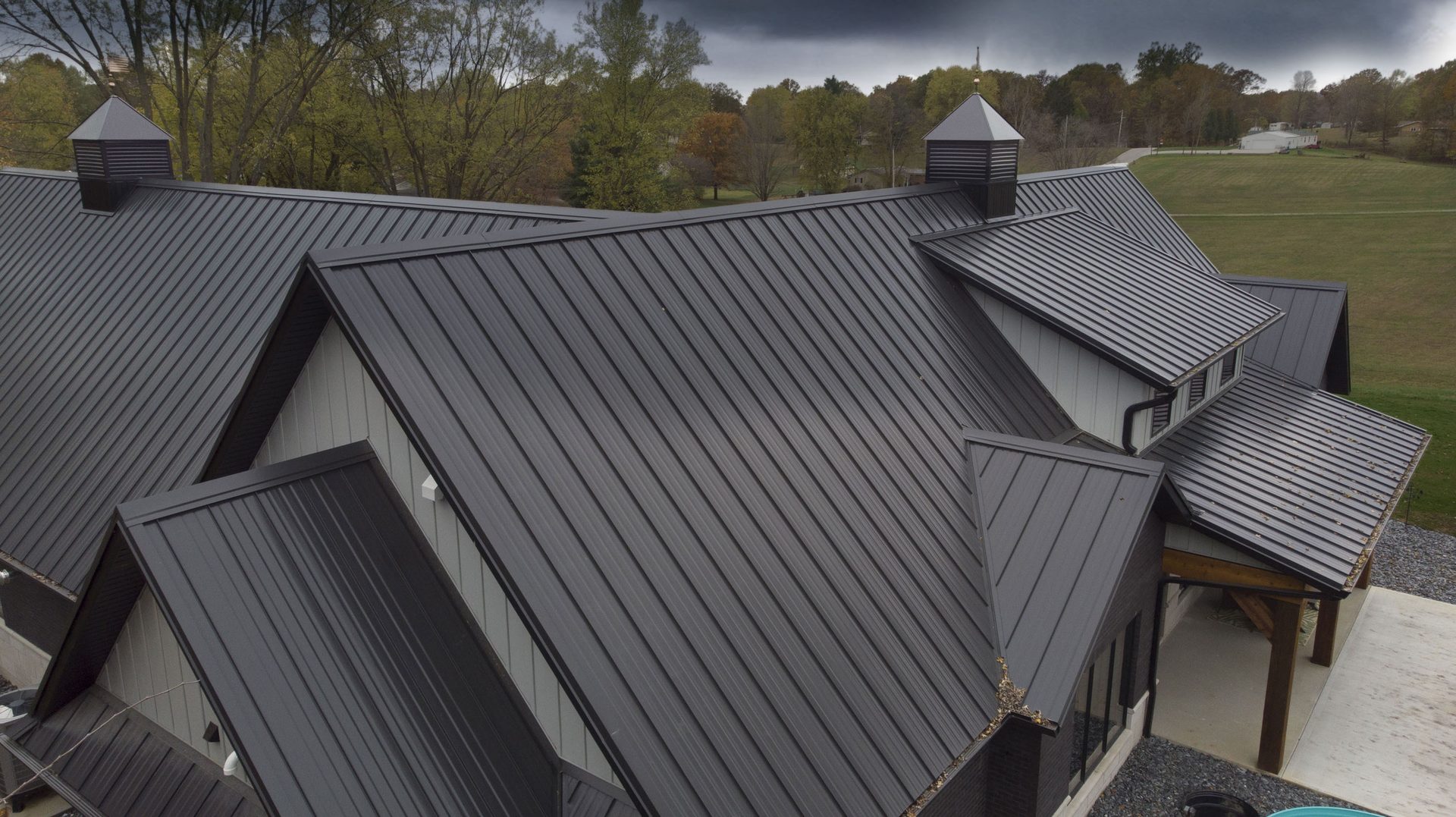
Photo Credit: Central States
SCROLL
DOWN
Danaik Garay of AlSteel Roofing in Fort Myers, Fla., and Diana Barriga of Property Master Solutions in Orlando, Fla., are two NWIR members who are leading the Hispanic Connection Council initiative.
Experts say roofers shouldn't mix different types of vents on roofs, as seen here.
What Do Hail and Wind Ratings Actually Mean?
What UL, FM, and Wind Ratings Mean on the Jobsite and Where They Fall Short
Roofing contractors today are expected to be more than installers — they’re translators. Manufacturers, insurers, and building officials routinely reference Class 4 impact resistance, UL 90 wind uplift, or FM-rated systems as proof a roof will “handle storms.” The problem is that those ratings often get treated as guarantees, when in reality they’re lab-based benchmarks with limits that matter on the jobsite.
For contractors, understanding what these ratings actually test and, just as importantly, what they don’t is critical for proper specification, code compliance, and managing customer expectations after a storm.

Impact Rating Tests: What Contractors Should Know
In the United States, impact resistance is most commonly measured using UL 2218 and FM 4473. Both standards exist to provide a controlled way to compare how roof coverings respond to impact, most commonly hail, but neither is designed to predict cosmetic outcomes after every storm.
UL 2218, often called the steel ball test, evaluates impact resistance by dropping hardened steel balls of a specific diameter onto roofing samples from a specific height. Products earn Class 1 through Class 4 ratings, with Class 4 requiring the material to withstand a 2-inch steel ball dropped from 20 feet without cracking or splitting. The test is repeatable and objective, which is why insurers and code officials rely on it. Testing agencies clearly state that the impact testing cannot be directly correlated with how a roof will withstand an actual hail event.
FM 4473 uses propelled ice balls instead of steel balls to better simulate the density and shatter behavior of real hailstones. Like UL 2218, it assigns Class 1–4 ratings and is commonly referenced in commercial and institutional specifications.
The key takeaway for contractors is impact ratings measure impact resistance at a single point under controlled conditions - not necessarily hail resistance or storm performance.
Why Wind Ratings Still Matter on the Jobsite
Despite their limitations, impact and wind ratings play an essential role. For contractors, the value is not the number itself but knowing how to use it properly. Ratings provide:
- Objective, third-party performance baselines
- A pathway to code compliance and permitting
- Guidance for insurance underwriting and incentives
- Reduced risk of catastrophic roof failure when applied correctly.
Where Impact Ratings Fall Short in the Field
Impact ratings do not promise a dent-free roof, approval of an insurance claim, or immunity from repair. Even Class 4–rated materials can show cosmetic denting after large or high-velocity hail events.
Weather data from the National Oceanic and Atmospheric Administration (NOAA) shows that severe hail (1 inch or larger) occurs regularly across much of the Midwest and Plains, with golf-ball-size and larger hail reported thousands of times per year. Events exceeding standard test thresholds such as baseball-size hail are not rare in major storm corridors.
While impact-rated roof materials may qualify end users for reduced insurance premiums, doing so may require homeowners to waive their rights to submit an aesthetic claim for hail damage on their impact-rated roofs in the future.
So, on the jobsite, contractors should talk about Class 4 systems as risk reducers, not damage eliminators. A higher impact rating lowers the likelihood of functional damage or leaks, but it doesn’t eliminate post-storm callbacks, aesthetic effects, inspections, or difficult insurance conversations.
Wind Ratings: Where Installation Matters Most
Unlike impact tests, wind ratings evaluate entire roof assemblies, not just the roof material.
The most commonly referenced standard is UL 580, which subjects a roof assembly to static and oscillating uplift pressure. Ratings such as Class 30, 60, and 90 correspond to the pounds per square foot (psf) of uplift the assembly can withstand. A Class 90 rating means the roof resists up to 90 psf of uplift, a level typically associated with severe hurricane-force conditions when applied through ASCE 7 wind calculations.
For metal roofing, especially structural standing seam systems, ASTM E1592 is often more relevant. It tests long panel spans over open framing with uniform pressure until failure, making it particularly applicable to engineered metal roof systems.
What Roofing Contractors Should Tell Customers About Wind Ratings
Follow these seven steps when discussing wind ratings and testing with homeowners.
--Compiled by Central States
When testing certifications come up with homeowners, clarity matters more than hype. Roofing contractors who explain ratings accurately protect both the customer and themselves.
- Start with what ratings are.
Impact and wind ratings are third-party test results that show how a roofing product or system performed under controlled laboratory conditions. They provide a reliable comparison point between products, but they’re not guarantees of zero damage in every storm. - Be clear about what ratings don’t mean.
A Class 4 impact rating doesn’t mean a roof will never dent, and a high wind rating doesn’t mean panels can’t lift if installation details aren’t followed. Ratings reduce risk - they don’t eliminate it. - Explain the difference between cosmetic and functional damage.
Many highly-rated roofing systems are designed to prevent leaks and structural failure, not cosmetic marks. After severe hail, a roof can still protect the building even if it shows visible dents. - Tie ratings to proper installation.
Ratings only apply when the roof is installed properly and as tested. Clip spacing, fastener type, panel gauge, substrate, and edge detailing all matter. - Connect ratings to local conditions.
Not every project needs the highest rating available. The right choice depends on local hail frequency, wind zone, building design, and budget. Ratings help guide those decisions—they don’t replace them. - Set expectations early.
The best time to explain storm ratings is before the storm, not after. Customers who understand how ratings work are less likely to be surprised if cosmetic damage occurs and more confident in the system they chose.
Position ratings as part of the system - not the whole story.
Underlayment, flashing details, substrate, ventilation, and workmanship often matter as much as the rating itself. Durable roofs are built through complete systems, not single numbers.
Why Wind Ratings Are Contractor-Critical
Wind ratings are very specific to full assemblies, so it’s important the roof is built exactly as tested.
Clip spacing, fastener type, gauge, substrate, and edge detailing all affect the final uplift performance. A panel profile with excellent lab results can fail prematurely if installed outside the recommendations or tested parameters. This is where manufacturer engineering and documentation separate marketing claims from usable data.
Manufacturers such as Central States publish wind uplift values tied to specific gauges, fastening patterns, and framing conditions, reinforcing the importance of constructing to industry and manufacturer specifications.
Limitations of Wind Ratings
Even high wind ratings have limits. Lab tests cannot fully replicate:
- Complex roof geometries
- Enhanced pressures at corners and edges
- Internal pressurization from envelope breaches
- Turbulence caused by terrain and surrounding structures
That’s why building codes rely on ASCE 7, which assigns higher wind pressures to perimeter and corner zones. Contractors who rely solely on a single uplift number without addressing zone-specific detailing, risk both performance issues and liability exposure.
“On the jobsite, contractors should talk about Class 4 systems as risk reducers, not damage eliminators. A higher impact rating lowers the likelihood of functional damage or leaks, but it doesn’t eliminate post-storm callbacks, aesthetic effects, inspections, or difficult insurance conversations.”
How Smart Contractors Talk About Ratings
The most effective contractors don’t sell ratings as guarantees. They position them as:
- Validated minimum performance thresholds
- Comparative tools - not promises
- One part of a broader roof system strategy
Installation quality, detailing, substrate selection, and adherence to tested assemblies matter more than chasing the highest classification. A correctly installed, well-detailed roof system often outperforms a higher-rated product installed carelessly.
Hail and wind ratings are meaningful when contractors understand their limits.
They don’t predict every storm outcome, but they do help contractors design, install, and defend roof systems that meet real-world hazards. Used responsibly, ratings are not sales tools. They are professional tools that help contractors build roofs that perform, pass inspection, and hold up under scrutiny long after the storm passes.
A Message for Roofing Leaders
Roofing is still a relationship business. As a roofing company, you’re not just building roofs but building relationships. And relationships are built on communication. People let you on their homes/offices, which are their most valuable assets. If they don’t trust you to communicate, they will not trust you to build.
So, forward-thinking roofing contractors are looking beyond nails and shingles. They are investing in customer experience, and SMS is the easiest and most effective place to start.
The strength of your roofing business does not lie just in how well you install, but it lies in how well you communicate.
As the roofing industry is constantly evolving, roofing contractors using modern communication tools like SMS will stand taller than those without. In short, in a roofing business, every lead counts, and every appointment matters. Therefore, texting is not just a luxury; it is a necessity. It keeps your jobs on track, your customers informed, and your business growing.
*Based on testing conducted by a third party in 2017 using UltraPly™ TPO SA versus standard adhered TPO. Application times vary with settings and environmental factors; actual results will vary.
**ISOGARD polyiso insulation performed up to 40% better in cold temperature 40°F (4°C) applications according to ASTM C1289 standards than major competitors when tested by an independent third party in September 2022. The increased R-value per inch indicates better thermal performance in cold temperature 40°F (4°C) from the same roofing systems using the same amount of insulation compared to leading competitive products on the market today. Results may vary.
Sean Moriarty is the CEO of Tectum Roofing, a Colorado-based contractor specializing in commercial roofing solutions, and the founder of Executive Roof Coach, a national training platform for roofing professionals.